

Last Updated: November 12, 2026
Quick Summary
To display an agate sphere safely, set it on a shallow ring or three-point stand on a level, stable surface away from edges and direct sun. Place towers on a flat base with a slight recess, against a back panel and above floor traffic. Group pieces in odd numbers with varied heights.
- Run a level, wobble, traffic, sun and weight check before placing any stone on a shelf.
- Choose a ring stand whose inner opening is slightly smaller than the sphere's widest diameter.
- Set towers on a base with a recess at least a few millimeters wider on each side.
- Style shelves in odd numbers with one tall, one round and one small accent piece.
- Dust weekly with a soft microfiber cloth and skip harsh cleaners, vinegar and ultrasonic machines.
Table of Contents
- Start with the Right Surface and a Safety Check
- Agate Sphere Display Ideas That Protect the Stone
- How to Display Crystal Towers Without the Tipping Risk
- Choosing Crystal Display Stands and Holders That Fit
- Crystal Shelf Styling: Groupings, Color, and Visual Balance
- Room-by-Room Placement for Agate Spheres and Towers
- Lighting, Dust, and Care for Polished Agate
- Add a Hand-Carved Agate Piece to Your Display
- Frequently Asked Questions
Start with the Right Surface and a Safety Check
An agate sphere will roll, and an agate tower will tip, so the surface you choose matters more than the stone itself.
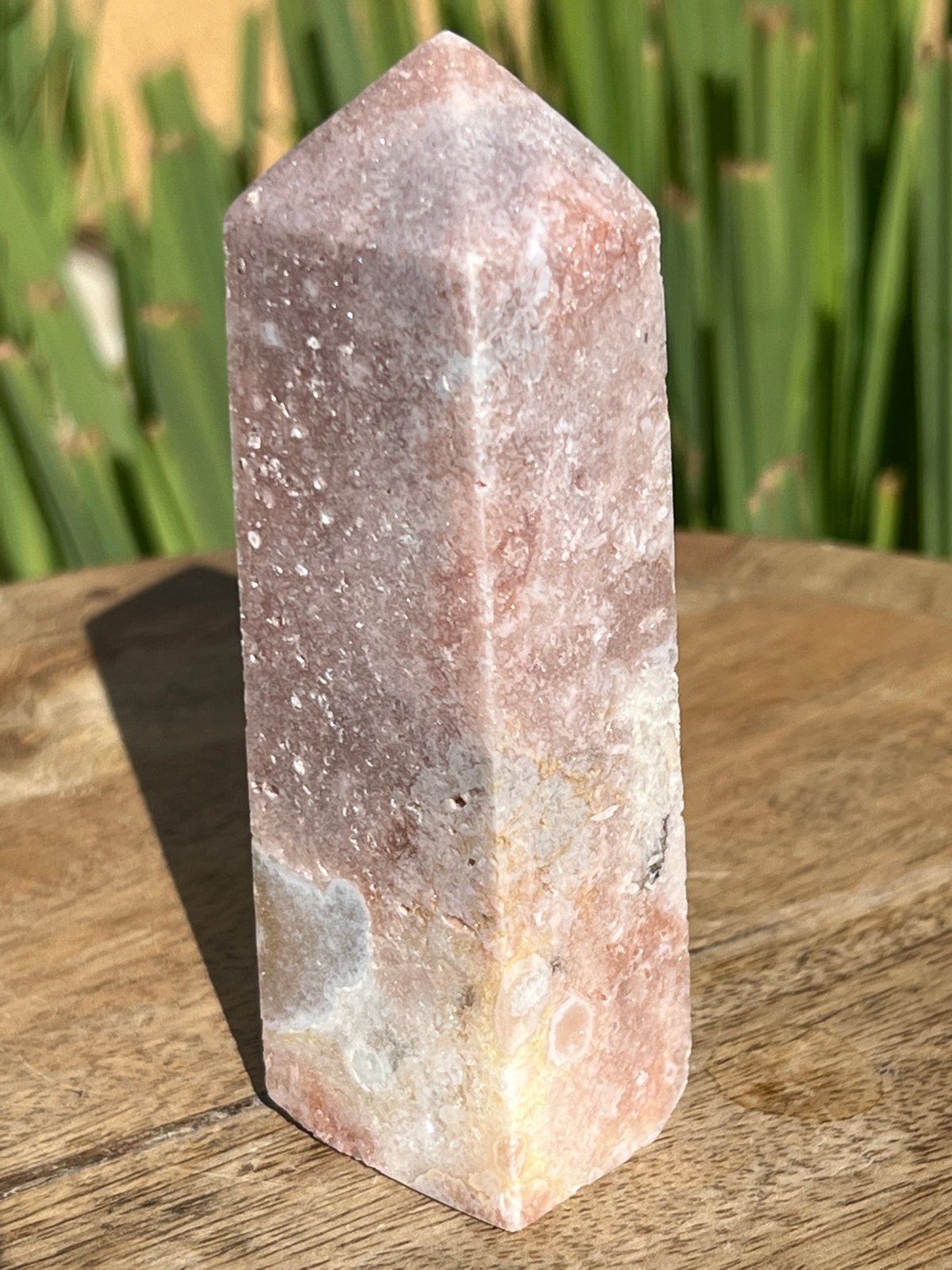
A fall onto tile can chip a tower's point or crack a sphere along a natural band. That is why the first step is a safety check, not a styling decision.
Run this check before anything goes on a shelf:
- Level test: set a marble on the surface. If it rolls, the shelf is off.
- Wobble test: press the shelf corner. Any flex means a tower will lean.
- Traffic test: is the spot in a walkway, near a door, or below shoulder height?
- Sun test: does direct sun hit the spot for hours each day?
- Weight test: can the shelf hold the stone plus a stand without sagging?
Watch out: felt pads under a stand hide a wobble instead of fixing it. A tower can sit stable for weeks, then tip the moment someone bumps the shelf.
For spheres, a shallow ring or a three-point stand stops the roll. For towers, a flat base with a slight recess is safer than a bare shelf.
Agate Sphere Display Ideas That Protect the Stone
A sphere needs two things: a cradle so it cannot roll, and a spot where its pattern faces the room. Banding looks different from every angle, so rotate the stone before you commit to a stand.
Here are display ideas that work well for agate spheres:
- Single sphere on a wooden ring stand at eye level on a bookshelf, pattern turned to the light.
- Sphere on a small pedestal in the center of a dining table, away from the passing plates.
- Sphere in a shallow ceramic dish on a console, with a few tumbled stones around it.
- Sphere inside a glass display case if you have pets or small children.
- Sphere on a stack of two hardcover books, which lifts it and adds height without a drill hole.
A common mistake is placing a sphere on a windowsill. The roll risk is high, and strong sun fades some stones over time. Keep spheres back from the glass and off narrow ledges.
If you are new to agate and want to see what a polished sphere looks like before you plan a spot, our Agate Geode Sphere shows the natural banding and color up close.
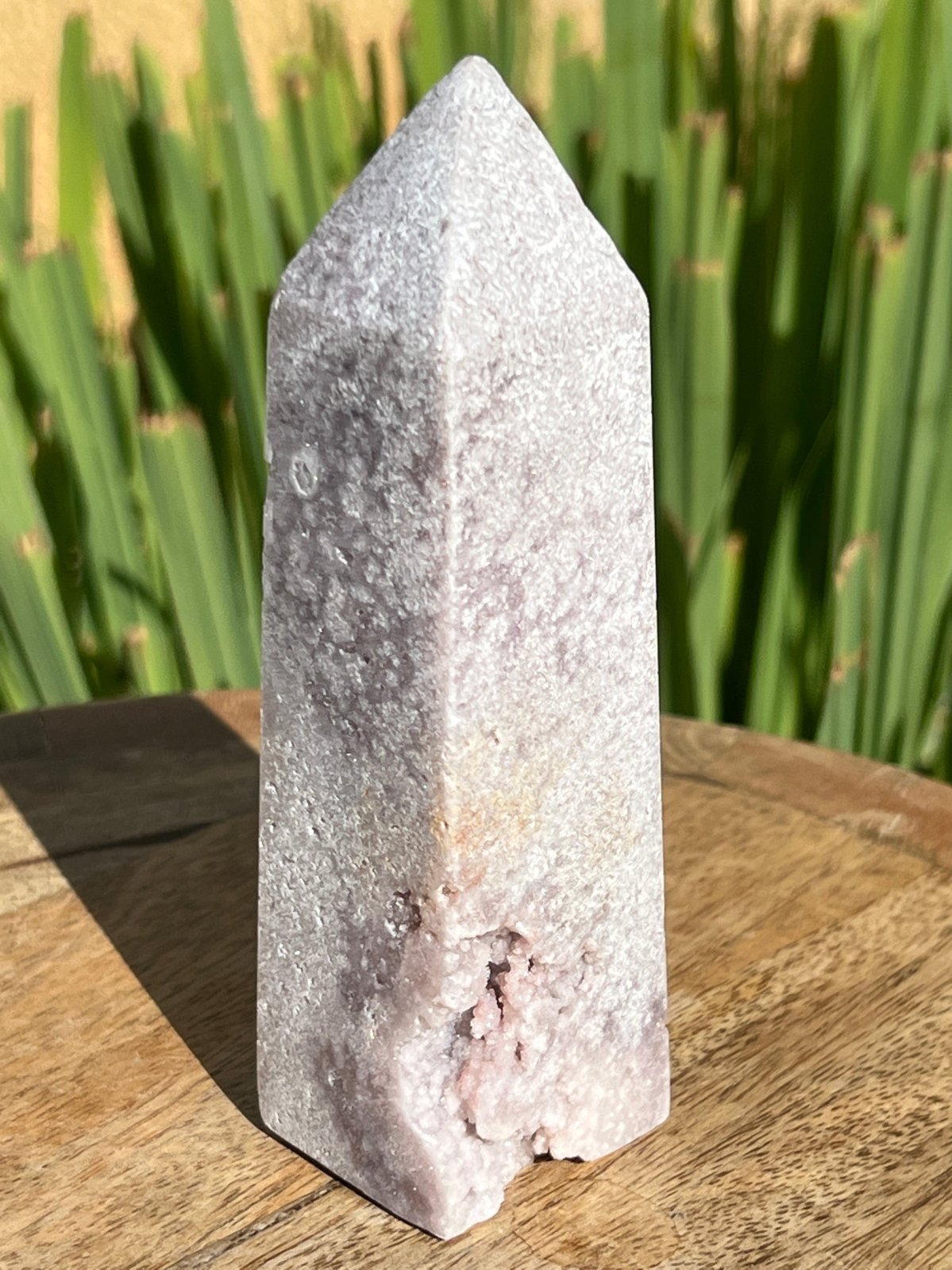
How to Display Crystal Towers Without the Tipping Risk
Towers tip because they are tall and narrow, and the fix is simple: give them a base wider than the stone and keep them out of bump range.
Use these steps to set a tower safely:
- Pick a base with a recess. A carved wooden or stone base holds the tower's foot in place.
- Place it against a back panel. A shelf back or a wall behind the tower stops it sliding forward.
- Keep it above floor traffic. Waist height or higher is safer than a low shelf.
- Group towers by height. Tall in back, short in front, so nothing leans on a neighbor.
- Skip the top shelf if you need a stool to reach it. Reaching up is how towers fall.
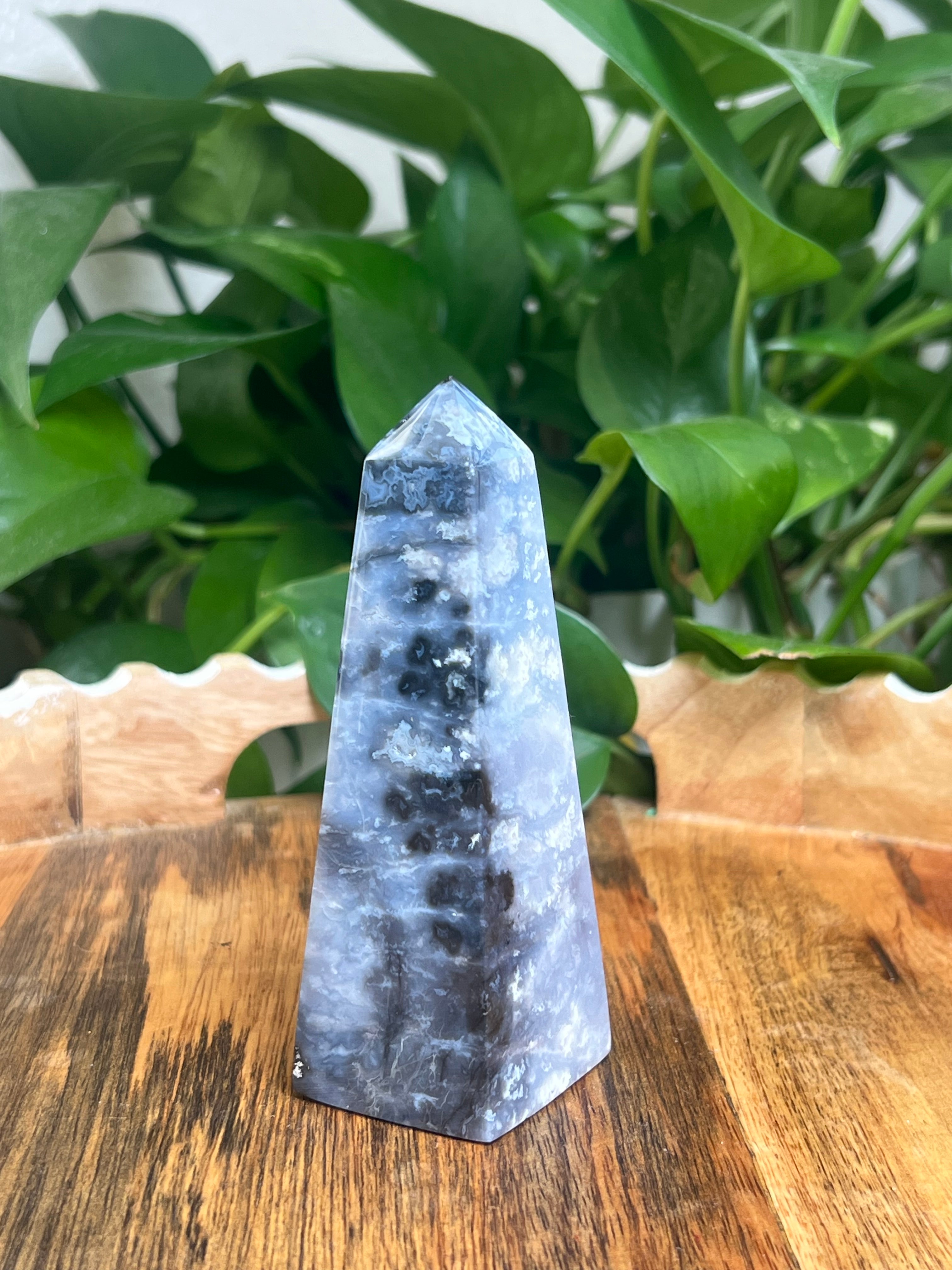
A pair of towers of different heights looks intentional and adds stability, because each one has its own footprint. If you are planning a tower placement and want to browse a real example first, our Crazy Lace Agate Towers 5 shows how a carved tower reads on a shelf.
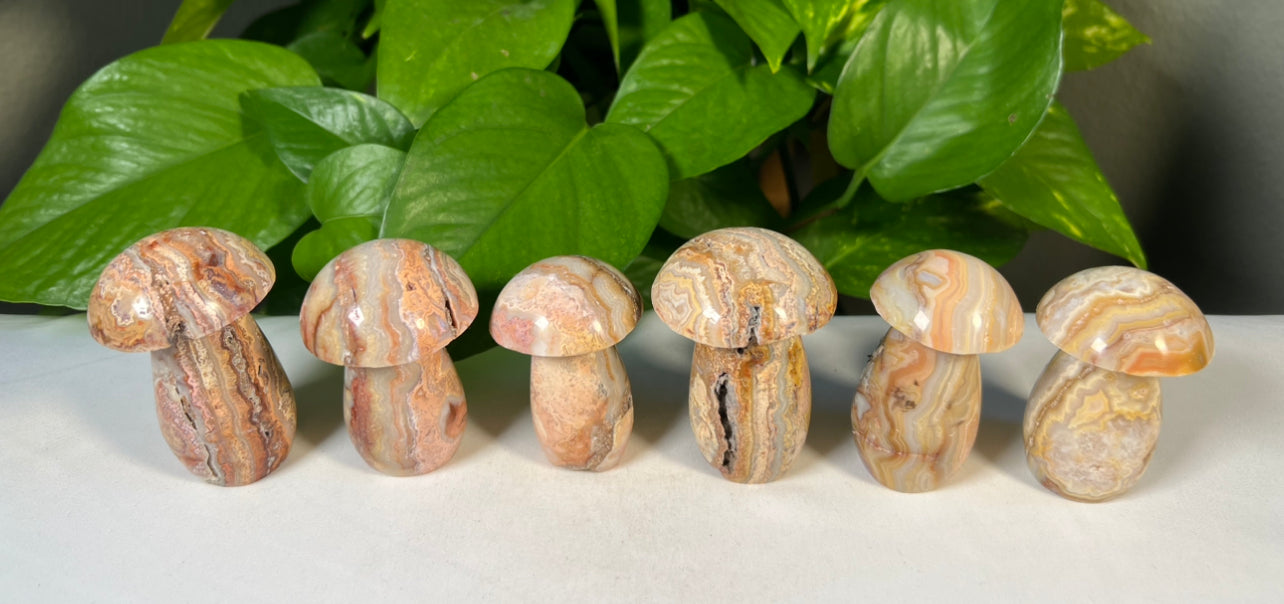
Watch out: never lean a tower against another stone. Any contact point becomes a chip waiting to happen.
Choosing Crystal Display Stands and Holders That Fit
The right stand does two jobs: it holds the stone steady and it lets the pattern show. Fit matters more than style, so measure the stone's width before you shop. For agate specifically, the stand must also account for the stone's polished, sometimes slippery surface and its weight relative to the base.
A crystal display stand is a small holder, usually wood, metal, or acrylic, shaped to cradle a sphere or seat a tower's base. The best stand matches the stone's size and weight, not just its color.
Measure before you buy.
Use this quick guide:
| Stone type | Best holder | What to check |
|---|---|---|
| Sphere under 5 cm | Three-point ring stand | Ring clears the widest point but does not let the sphere drop through |
| Sphere over 5 cm | Wide wooden ring or shallow dish | Base diameter wider than the sphere; felt or cork lining |
| Short tower | Flat base with recess | Foot sits fully inside the recess with no overhang |
| Tall tower | Weighted base | Base heavier than the stone; recess deep enough to stop sliding |
| Any polished piece | Felt-lined holder | Lining protects the polished surface from scratches |
Metal stands can scratch a polished surface, so look for felt or cork lining. Acrylic is cheap and clear but light, and a light stand slides on a smooth shelf.
If you are deciding how to hold a sphere safely and want to see and buy a fitting stand, our Stand Sphere 1 is a simple wooden option sized for a single sphere.
Crystal Shelf Styling: Groupings, Color, and Visual Balance
Crystal shelf styling works best in odd numbers, with one tall piece, one round piece, and one small accent. Three objects read as a group; two look like a mistake, and five look cluttered on a narrow shelf.
Balance comes from contrast, not symmetry. Put a tall tower beside a low sphere and the eye moves between them. Match two spheres side by side and the shelf goes flat.
Try these arrangement rules:
- Vary height: one tall, one medium, one low per grouping.
- Repeat one color: pull a band color from the agate into a nearby book or vase.
- Leave space: empty shelf space makes each stone look deliberate.
- Vary texture: pair polished agate with a matte ceramic or a rough stone.
- Anchor with a tray: a shallow tray holds a small grouping and makes it easy to move.
Color palettes help. Moss agate's green and cream bands sit well with wood, linen, and plants. Blue plume agate's soft blue and white suits pale walls and silver accents. Build the shelf around the stone's strongest band color, not against it.
Room-by-Room Placement for Agate Spheres and Towers
Placement changes by room because light, traffic, and mood change. A shelf in a busy hallway needs different handling than a quiet bedroom corner.
Living room: a mantel or console is the classic spot.
Bedroom: a nightstand or dresser suits smaller pieces. Keep towers low and back so a reaching hand does not knock them.
Home office: a desk corner or a wall shelf.
Entryway: a console table with a shallow dish. High traffic means no loose spheres on the edge.
Bathroom: skip it. Steam and water spots dull a polished surface over time.
Some collectors place stones by intention or feng shui principles, putting a grounding piece in a quiet corner and a brighter one near a workspace. If you are placing pieces room by room and want a distinctive tower to anchor a spot, our Grape Agate Tower 5 is a good candidate for a focal shelf.
Smithsonian National Museum of Natural History guide to quartz and chalcedony
Lighting, Dust, and Care for Polished Agate
Polished agate shows its best color under soft, angled light, and it stays that way with a simple dust routine.
Lighting tips:
- Side light beats overhead. A lamp at an angle brings out banding and depth; overhead light flattens the pattern.
- Skip direct sun. Long exposure can fade some stones and heats the surface; keep pieces a few feet back from a bright window.
- Use a warm bulb near wood stands and a neutral bulb near pale stones.
- Add a small spotlight for a display case or a dark shelf corner, aimed across the surface rather than straight down.
- Rotate the stone before you commit. View the sphere or tower from several angles under the final light; the best face of the banding may not be the one you first see.
Dust is the quiet problem. A visible film dulls a polished surface fast, and gritty dust can scratch when wiped.
Surface protection matters as much as cleaning. Felt pads under a stand protect furniture but can hide a wobble, so check the shelf is level first.
Watch out: a soft cloth that has picked up grit can leave fine scratches on a polished surface; shake or rinse the cloth before wiping a sphere or tower.
Just lift the piece carefully and set it back on its stand, never on a bare edge.
Gemological Institute of America guide to agate and chalcedony
Add a Hand-Carved Agate Piece to Your Display
A display grows best one considered piece at a time, and a hand-carved agate piece gives a shelf a center it was missing.
At Oak & Quartz, each carving is individually sourced on video call to ensure quality of the artisan work, and each piece is all natural with no dye or enhancement. Our Jasper Stone Types and Colors: A Guide is a useful next read if you want to understand the stone families behind what you collect.
A few things to look for when adding a piece:
- Pattern placement: does the banding run where you will see it?
- Finish: is the polish even, with no dull patches?
- Base: does it sit flat without a wobble?
- Scale: does it fit the shelf you have, not the shelf you want?
Our collection includes pieces like the Moss Agate Sphere and the Blue Plume Agate Tower: NB, each with its own pattern. Start with one piece that fits your space, then build the grouping around it.
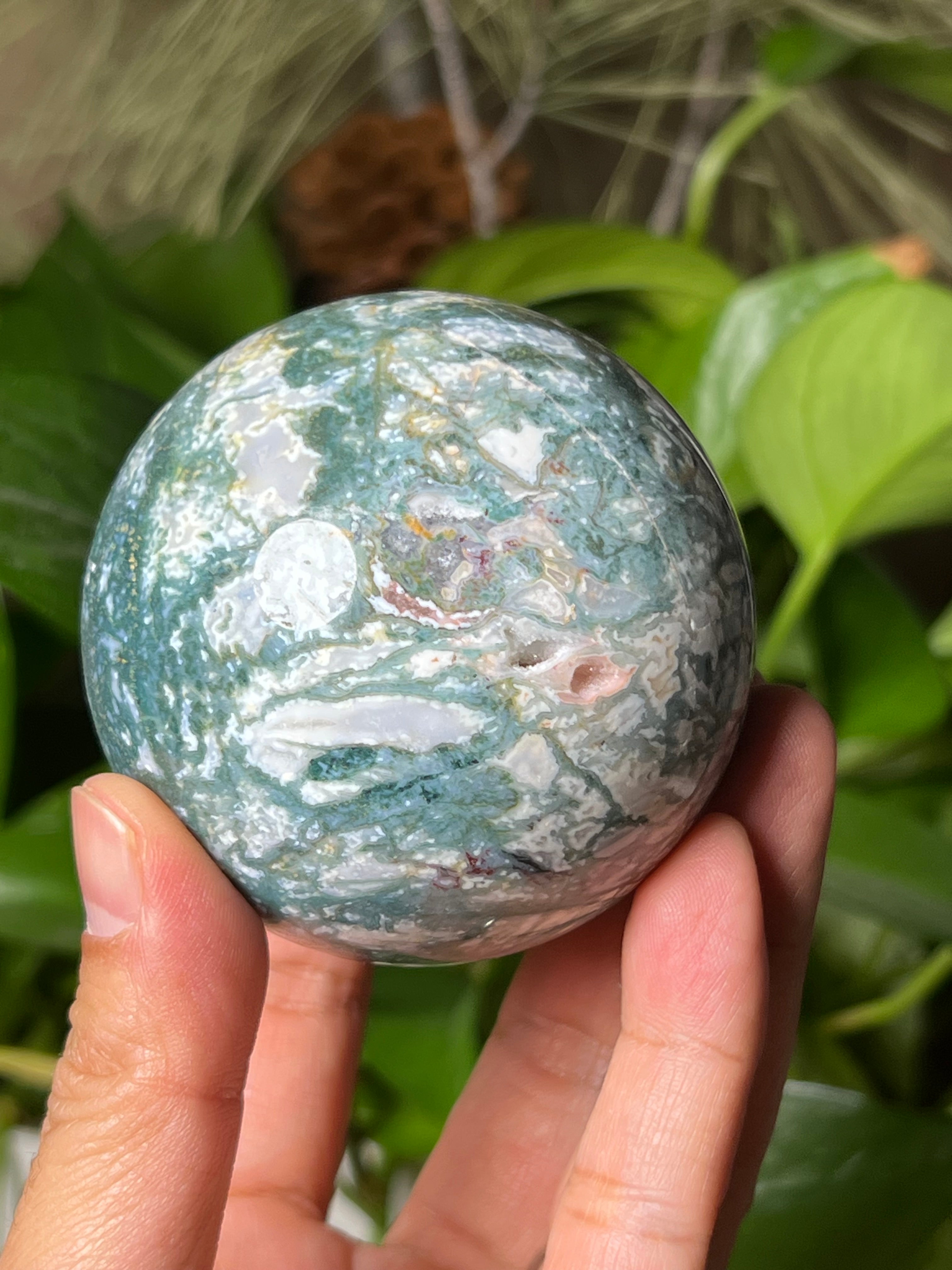
Building a display that looks collected rather than cluttered takes patience, and the right stones make it easier. Oak & Quartz offers hand-carved agate spheres and towers, each sourced on video call and left all natural with no dye or enhancement.
Frequently Asked Questions
Do agate spheres need a stand?
A stand is not strictly required, but it is the safer choice. A polished agate sphere will roll on any flat surface, and one nudge can send it off a shelf. A stand keeps the sphere in place and stops it rolling off a shelf.
Which crystals should not be kept together?
The practical answer is about hardness, not energy. Softer stones can be scratched if they rub against harder ones, so keep them separated. Keep harder pieces such as quartz from knocking into softer ones. If you follow metaphysical practice, some collectors separate stones used for calming intentions from those used for stimulating ones, but that is a personal choice rather than a rule.
What is the best way to display crystal towers?
Stand towers upright on a level, stable base and keep them away from high-traffic edges. A tower's centre of gravity is high, so a narrow shelf, a wobbly table, or a spot near a door is a risk. Place the tallest tower toward the back of the shelf. Grouping a tower with a sphere at its base also widens the visual footprint and makes the arrangement look deliberate.
How can you arrange crystals on a shelf without making it look cluttered?
Work in odd-numbered groups of three or five, vary the heights, and leave empty space between groupings. Pick one anchor piece, usually the largest sphere or tallest tower, then add two smaller pieces at different heights. Keep to two or three colours that echo the room's palette, and let the agate banding be the focal point rather than filling every gap. A single tray or pedestal under each group also visually contains it.
